6 min read
Posted
Thu, May 28, 2026
@ 28:05 AM ADT
Posted by
Categories
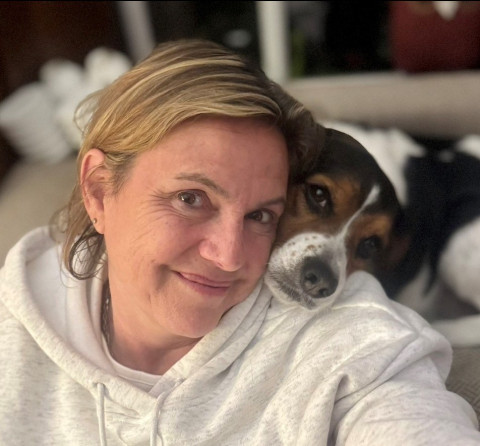
You could say Dr. Michelle Matthews was destined to carve out a meaningful career in healthcare.
A proud Mi’kmaq physician from Eskasoni First Nation, Michelle spent the first years of her life in Cape Breton raised by her maternal grandmother and surrounded by stories of medicine, resilience and service.
Healthcare was woven into the fabric of her family history. Her great-grandfather, Noel Jeddore, was known as both a spiritual leader and healer in Conne River, Newfoundland and Labrador. Her paternal grand-aunt broke barriers after being accepted into McGill Medical School in 1921, at a time when women, particularly Indigenous women, were rarely welcomed into medical education.
The women in her immediate family were trailblazers as well. Michelle’s mother and aunt were among the first Mi’kmaq women to become nurses in Nova Scotia. In the 1990s, her aunt established the province’s first Aboriginal diabetic clinic, while her mother worked as a community health nurse with both the Confederacy of Mainland Mi’kmaq and the Eskasoni First Nation Health Centre.
“When I was young, our family would gather at our house in Eskasoni and I would sit riveted listening to their stories about late nights in the ER, pediatric cases and tales from labour and delivery. Even as a child, I knew what I wanted to be: a doctor,” Michelle recalls.
Life, however, took a different path before eventually leading her back to medicine. After high school, Michelle began a bachelor of science degree at Mount Saint Vincent University, but it would take another 21 years before she completed it. In between, she earned an honours BA in anthropology and communication, a master of arts in film studies and eventually a BSc in biology and history.
Then came the life-changing moment she still vividly remembers, opening an email and discovering she had been accepted to both McMaster University and the Northern Ontario School of Medicine.
Michelle attended the Michael G. DeGroote School of Medicine at McMaster University, becoming the third Mi’kmaq doctor in Nova Scotia and the first from Eskasoni First Nation. Though proud of the achievement, the journey toward her medical degree was not easy. She was nearly 2,000 kilometres away from her family and often felt the absence of mentorship and Indigenous representation in medicine.
Knowing she wanted to return home, Michelle selected only one residency choice through the Canadian Resident Matching Service: the Dalhousie Family Medicine Residency Program. She matched to Kentville, just 15 minutes from her Port Williams home.
During her residency, she completed an elective at the Eskasoni Health Centre under the mentorship of Dr. Rob Todd. The experience was affirming and emotional. “It was incredible to see the people I had grown up with and help them in such a meaningful way. I could tell they felt comfortable with me,” she says.
Michelle graduated from the residency program at the age of 50, and hasn’t stopped giving back to her community since then.
Today, Michelle wears many hats. She divides her time between Mud Creek Medical Co-operative, the Glooscap First Nation Health and Healing Centre, the Annapolis Valley First Nation Health Centre and the Nova Scotia Opioid Replacement Program.
Two years ago, after reaching out to health directors in both Glooscap and Annapolis Valley First Nation to inquire about opportunities, timing and circumstance aligned perfectly. She began practising in both communities in October 2024. “I immediately felt accepted. I think there was a sense of appreciation that there was someone who truly understood them on a fundamental level,” she says.
For Michelle, culturally safe healthcare begins with listening, not just to what patients say, but also to what remains unspoken. She believes humour, humility and openness are essential tools in building trust with patients. She also sees value in recognizing traditional health practices as an important part of care. “Many community members make use of traditional medicines and practices such as smudging and sweat lodges. Being open to those practices matters,” she explains.
Practising in community health centres, Michelle still sees patients share salves and traditional remedies made from herbs, sheep tallow or bear grease, which are medicines passed through generations.
While progress has been made in Indigenous healthcare, Michelle says there is still work to do. She speaks openly about the racism Indigenous patients continue to face within healthcare systems and emphasizes the importance of challenging harmful stereotypes and improving equitable care. “It’s our role as physicians and respected members of our communities to facilitate change,” she says.
She is encouraged by the growing focus on Indigenous health education within medical schools and residency programs and believes a cultural renaissance is underway.
Most of all, Michelle hopes her story inspires the next generation. “Every Indigenous person that enters medicine further opens the door to what is attainable,” she says. And that door is already opening wider. In Eskasoni alone, two additional students were accepted into Dalhousie Medical School last year. And for Michelle, that may be the most meaningful outcome of all. Seeing future generations realize that they, too, belong in medicine.
Interested in learning more about practising in Indigenous communities? Visit our website and discover opportunities in our province.