4 min read
Posted
Thu, Oct 29, 2026
@ 29:10 AM ADT
Posted by
Categories
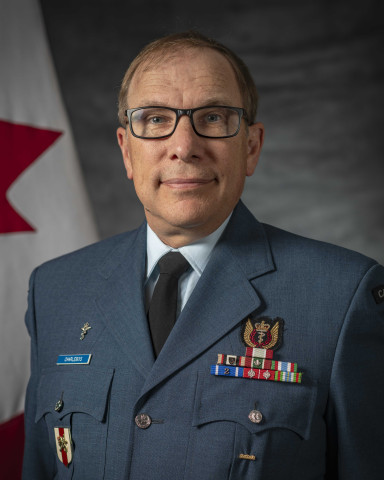
After 37 years of service with the Canadian Armed Forces, Remembrance Day holds special significance for Dr. Paul Charlebois. Having retired from the military this past September, he reflects on his years of service, the relationships he's built and the sacrifices made by those who served alongside him.
Born into a military family, Paul followed in the footsteps of both parents when he joined the Canadian Armed Forces. He later entered the Medical Officer Training Plan while studying medicine at Dalhousie University.
Paul served on humanitarian, peace-support and military operations in Canada and abroad. His deployments included the 1998 Canadian ice storm, Kosovo, Bosnia-Herzegovina, Afghanistan, Sierra Leone during the Ebola crisis and Iraq. He also supported the response to Hurricane Katrina and Canada’s COVID-19 response.
“The deployments stand out. But it has always been the people and relationships you build,” he says.
Those relationships often form under difficult circumstances, far from home and without the familiar resources of a Canadian hospital. Paul learned to be resourceful, to rely on his team and to become, “comfortable being uncomfortable.” These lessons continue to shape his clinical and teaching roles in Halifax.
On Remembrance Day he thinks about his parents, his wife and son, and colleagues who became like family. He remembers those who did not return home, as well as those who returned but carried visible and invisible wounds. “It’s about sacrifice,” he says. “I honour the people who have passed away and those who are here but have served and haven’t been the same since coming back.”
Although his military service has ended, its influence remains deeply interlaced into Paul’s work within Nova Scotia Health. As an internal medicine physician at the Halifax Infirmary and Dartmouth General Hospital, he brings adaptability, resourcefulness and perspective developed over decades of military service to every patient and team he supports. Deployments often required him to work within small, self-sufficient teams, make difficult decisions in uncertain conditions and provide the best possible care without all the resources he might normally have on hand.
“When you're deployed, you don’t have all the tools, but you still have to ask, ‘How do I give the best care to the person in front of me?’” he says. That experience helps him remain calm when circumstances are complex and focus on what patients need most. It's also how he supports residents and other medical learners through challenging days, helping them approach uncertainty with confidence, perspective and compassion.
Each Remembrance Day, we pause to honour those who have served Canada in times of war, conflict and peace. We remember those who gave their lives, those who returned home forever changed and those who continue to carry the experiences of service with them. We also hold military families in our thoughts, whose sacrifices include long separations, missed milestones, uncertainty and lasting effects that being in military service can have on a loved one.
The recent tragedy at CFB Wainwright in Alberta, which claimed the lives of four Canadian Armed Forces members and left many others injured, is a heartbreaking reminder that the risks and sacrifices of serving your country are not confined to history. We are grateful to all members of the Canadian Armed Forces for their service.